
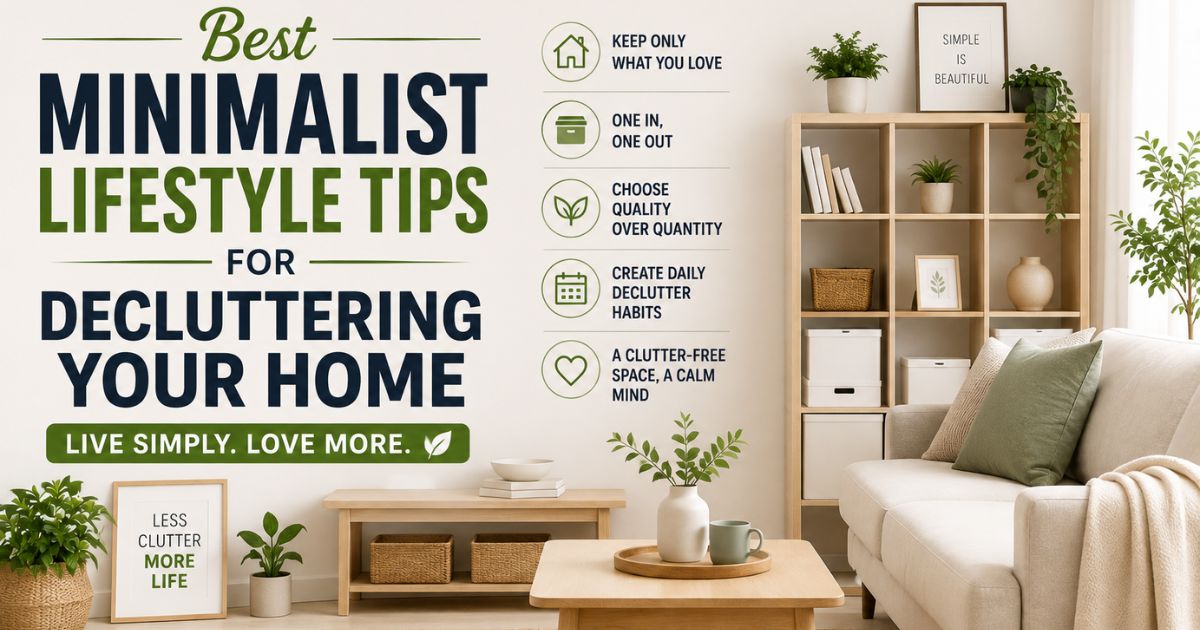

Moving through a cluttered home drains your energy before you’ve even started your day. Piles of unused belongings, overstuffed closets, and countertops buried under miscellaneous items create visual noise that affects your mental clarity and productivity. Minimalism offers a refreshing alternative—not about owning nothing, but about keeping only what adds value to your life.
This guide provides actionable strategies for decluttering your home using minimalist principles. You’ll discover room-by-room methods, psychological techniques to overcome attachment to possessions, and sustainable habits that prevent clutter from returning. Whether you’re downsizing, preparing for a move, or simply seeking a calmer living environment, these lifestyle tips will help you create a home that supports rather than suffocates your daily life.
Why Minimalism Works for Modern Living
Minimalism addresses a fundamental problem: we accumulate belongings faster than we remove them. The average household contains over 300,000 items, yet we regularly use only a fraction of these possessions.
A minimalist approach reduces decision fatigue. When you own fewer items, you spend less time choosing what to wear, searching for misplaced objects, or cleaning around things you don’t use. This mental bandwidth becomes available for activities that genuinely matter to you.
Key benefits include:
- Reduced stress and anxiety from visual clutter
- Lower cleaning and maintenance time
- Financial savings from decreased impulse purchases
- Increased focus and productivity
- More physical space for activities you enjoy
- Environmental benefits through conscious consumption
The philosophy doesn’t require extreme sacrifice. You’re not abandoning comfort or living out of a backpack. Instead, you’re curating your surroundings to reflect your actual needs and values.
The Psychology Behind Clutter Accumulation
Understanding why we hold onto unnecessary items makes the decluttering process more effective and lasting.
Common psychological barriers:
Sunk cost fallacy: You keep items because you spent money on them, even though that expense is irretrievable regardless of whether you keep the item.
Aspirational identity: Clothing for a hobby you never started, books you intend to read “someday,” or kitchen gadgets for recipes you haven’t made represent imagined versions of yourself rather than reality.
Inherited obligation: Family heirlooms or gifts create guilt around disposal, even when these items don’t fit your lifestyle or aesthetic preferences.
Scarcity mindset: Growing up with limited resources or experiencing financial instability creates “just in case” thinking that leads to excessive backup supplies.
Emotional anchoring: Objects become proxies for memories, making disposal feel like abandoning the experience itself.
Recognizing these patterns helps you address the root cause rather than temporarily moving clutter around. When you understand that a photograph preserves a memory more efficiently than a bulky souvenir, or that your current self matters more than hypothetical future scenarios, decision-making becomes clearer.
The Core Principles of Minimalist Decluttering
Effective decluttering follows specific principles that distinguish it from simple reorganization.
Intentionality over default ownership: Question why you own each item rather than assuming everything deserves space in your home.
Quality over quantity: One excellent knife outperforms a drawer full of mediocre ones. This applies to clothing, furniture, kitchenware, and nearly every category.
Function over sentiment: Objects should earn their place through regular use, not emotional attachment alone.
One in, one out: When acquiring something new, remove something existing from the same category.
Digital-first solutions: Manuals, documents, recipes, and reference materials often work better as searchable files than physical papers.
Visible storage: If items hide in boxes for months, you probably don’t need them.
These principles create a framework for consistent decision-making throughout your decluttering journey.
Room-by-Room Decluttering Strategy
Kitchen and Dining Areas
Kitchens accumulate duplicates and single-purpose gadgets that occupy valuable space.
Start with these categories:
Cooking utensils: Keep one high-quality version of each tool. Three spatulas don’t cook better than one good one.
Dishes and glassware: Count how many people you actually serve. Eight place settings suffice for most households, even when hosting occasionally.
Food storage containers: Match every lid to a container. Recycle orphaned pieces. Keep only the sizes you regularly use.
Pantry items: Check expiration dates. Group similar items together. If you haven’t used a specialty ingredient in six months, you probably won’t.
Appliances: Countertop appliances should earn their footprint through weekly use. Store or donate anything used less frequently.
Junk drawer contents: Dedicate 15 minutes to sorting. Most households can eliminate 60-70% of these miscellaneous items.
A functional kitchen contains tools for meals you actually prepare, not equipment for aspirational cooking projects.
Bedroom and Closet
Clothing represents one of the most challenging decluttering categories due to emotional attachment and body image issues.
The practical wardrobe approach:
Remove everything from your closet. This creates a clean slate and reveals the full scope of what you own.
Sort into four categories:
- Currently wear regularly (past three months)
- Special occasion (worn annually for specific events)
- Doesn’t fit but might again
- Haven’t worn in over a year
Category 1 goes back immediately. Category 2 requires honest assessment—do you actually attend events requiring these items? Category 3 needs a size-specific container with a six-month deadline. Category 4 should be donated.
Apply these tests:
- Does it fit comfortably right now?
- Do you feel confident wearing it?
- Is it in good repair without stains or damage?
- Does it match at least three other items you own?
- Have you worn it in the past season it was appropriate for?
Nightstand and surfaces: These horizontal spaces attract clutter magnetically. Designate specific purposes—reading material, water glass, alarm clock—and remove everything else.
Bathroom and Personal Care
Bathrooms harbor expired products and duplicate items purchased because you forgot you already owned them.
Focus areas:
Medications and supplements: Check expiration dates monthly. Dispose of outdated items properly at pharmacy take-back programs.
Skincare and cosmetics: Most products degrade within 6-12 months of opening. Keep only what you use in your current routine.
Towels and linens: Two sets per person (one in use, one in the wash) handles most situations. Donate worn towels to animal shelters.
Cleaning products: Multipurpose cleaners eliminate the need for specialized products for every surface.
Toiletries backstock: One backup of essentials prevents both running out and accumulating excessive inventory.
Living Room and Common Areas
These spaces often become dumping grounds for items without designated homes.
Decluttering approach:
Surfaces first: Coffee tables, side tables, and mantels should have defined purposes. Remove decorative items that you no longer notice.
Media collections: Physical media takes considerable space. Digitize or streaming services replace most collections. Keep only items with significant sentimental value or unavailable digitally.
Books: Retention criteria should include reference value or reread potential. Libraries serve browsing needs without storage requirements.
Furniture: Each piece should serve a function. Decorative-only furniture in small spaces sacrifices usability for appearance.
Cables and electronics: Bundle and label active cables. Recycle obsolete chargers and accessories for devices you no longer own.
Home Office and Paper Management
Paper creates unique challenges because it seems important and difficult to process.
Systematic paper handling:
Create three categories:
- Action required (bills to pay, forms to complete)
- Temporary reference (current project materials)
- Permanent records (tax documents, legal papers)
Everything else can be discarded or digitized.
Immediate sorting rules:
- Receipts: Photograph for warranties, then discard (unless needed for taxes)
- Manuals: Available online for nearly every product
- Magazines: If unread after three months, cancel subscription
- Sentimental papers: Scan and organize digitally
- Old schoolwork/children’s art: Select representative samples, photograph the rest
Digital organization: Minimalism applies to files too. Regular folder cleanup prevents digital clutter from mirroring physical problems.
Garage, Basement, and Storage Areas
These spaces become black holes where items disappear indefinitely.
The storage area rule: If something’s valuable enough to keep, it should be accessible enough to use. Items buried in storage for over a year rarely deserve that space.
Category-by-category approach:
Tools: Keep what matches your actual DIY skill level and projects. Borrowing or renting specialized tools beats owning rarely-used equipment.
Seasonal items: Holiday decorations should fit in designated containers. If it doesn’t fit, you own too many.
Sports equipment: Keep only gear for activities you’ve done in the past year.
Sentimental boxes: Set a limit (one or two containers). Select the most meaningful items. Photograph the rest before letting go.
The One-Month Decluttering Plan
Sustainable decluttering happens gradually rather than through exhausting weekend marathons.
Week 1: High-impact areas (Kitchen counters, bathroom counters, bedroom surfaces)
- 15 minutes daily
- Focus on items you touch regularly
- Immediate improvement in daily function
Week 2: Clothing and textiles
- 30 minutes daily
- Complete the wardrobe sorting process
- Address linens and towels
Week 3: Hidden clutter (Drawers, cabinets, under-sink areas)
- 20 minutes daily
- Process papers and documents
- Organize remaining items with intention
Week 4: Storage areas and finishing
- Variable time based on accumulation
- Address garage, basement, or storage unit
- Establish maintenance systems
This schedule prevents burnout while creating momentum through visible progress.
Emotional Decluttering Techniques
Physical decluttering often stalls due to emotional roadblocks rather than time constraints.
Practical methods for difficult items:
The photograph method: Take pictures of sentimental items before donating. You preserve the memory without the storage burden.
The box test: Unsure items go in a box marked with today’s date. If you haven’t retrieved anything after six months, donate without opening.
The gratitude release: Thank items for their service before letting go. This acknowledges their past value while accepting they’ve fulfilled their purpose.
The opportunity cost: Every item you keep prevents something else from occupying that space—including empty space itself.
The curator mindset: Museums display selected highlights, not everything they own. Your home deserves the same thoughtful curation.
Future-self consideration: Will you want to move, clean, or organize this item repeatedly over the coming years?
Sustainable Systems to Prevent Re-cluttering
Decluttering once means nothing if clutter returns within months.
Entry point controls:
The 24-hour rule: Wait a full day before purchasing non-essential items. Most impulse desires fade.
Designated donation spot: A box or bag near your entry captures items immediately when you recognize you don’t need them.
Strict category limits: Define maximum quantities for tendency categories (20 shirts, 10 mugs, 15 books).
Regular review cycles: Monthly quick sweeps prevent gradual accumulation.
Gift boundaries: Communicate preferences to family and friends. Experiences or consumables beat physical gifts.
Unsubscribe from marketing: You can’t buy what you don’t know exists. Reduce promotional emails and catalogs.
One-in-one-out enforcement: Make this non-negotiable for categories prone to accumulation.
Minimalist Lifestyle Tips Beyond Physical Items
True minimalism extends past possessions into how you spend time and attention.
Digital minimalism: Uninstall unused apps. Unsubscribe from newsletters you don’t read. Organize photos and files quarterly.
Calendar decluttering: Obligations accumulate like possessions. Regularly assess commitments and decline activities that don’t align with priorities.
Relationship boundaries: Social minimalism means nurturing meaningful connections rather than maintaining numerous superficial ones.
Information diet: Constant content consumption clutters mental space. Curate information sources deliberately.
Financial simplification: Fewer accounts, subscriptions, and recurring charges reduce management overhead.
These lifestyle adjustments complement physical decluttering to create comprehensive simplicity.
Common Decluttering Mistakes to Avoid
Starting without a plan: Random decluttering creates messes without meaningful progress. Choose specific areas and categories.
Buying organization products first: Container stores profit from this mistake. Declutter first, then organize what remains. You’ll need far less than you think.
Making it harder to access things you use: Minimalism shouldn’t create inconvenience. Frequently-used items deserve prime locations.
Perfectionism paralysis: Your home won’t transform overnight. Progress matters more than perfection.
Decluttering other people’s belongings: Focus on your items. Nagging family members creates resistance. Your example speaks louder.
Keeping things “just in case”: This scenario rarely materializes. The cost of replacing an occasionally-needed item is usually less than storing it indefinitely.
Ignoring the root cause: If shopping provides emotional comfort or entertainment, decluttering addresses symptoms rather than causes.
Minimalism with Kids and Family
Household minimalism requires cooperation, not dictatorship.
Age-appropriate involvement:
Young children (3-7): Make decluttering games. “Can you find five toys you don’t play with anymore?” Rotate toys seasonally rather than having everything accessible.
Older children (8-12): Set category limits they choose within. “You can keep 20 toys—you decide which ones matter most.”
Teenagers: Respect their space while establishing household standards. Their room is theirs; shared spaces require cooperation.
Partners: Discuss values and goals before decluttering. Focus on your items primarily. Share results rather than criticism.
Designated personal spaces: Everyone gets some area that’s entirely theirs, organized or not.
Shared space agreements: Common areas need agreed-upon standards. What level of tidiness works for everyone?
Leading by example: Your sustained practice influences others more effectively than lectures.
When to Seek Professional Help
Some situations benefit from professional organizers or therapists.
Consider professional assistance when:
- Clutter impairs home safety (blocked exits, pest issues, structural problems)
- You’ve attempted decluttering repeatedly without lasting results
- Emotional distress prevents you from making decisions
- Hoarding behaviors appear (acquiring excessive items, inability to discard, living space impairment)
- Family conflict over clutter creates relationship damage
- You’re facing time-sensitive needs (downsizing, moving, health issues)
Professional organizers provide systems, accountability, and physical assistance. Therapists address underlying emotional or psychological factors. Neither represents failure—they’re tools for specific challenges.
Minimalist Living in Different Life Stages
Appropriate minimalism adapts to your current circumstances.
Young professionals: Mobility matters. Keep possessions portable. Avoid accumulating furniture that won’t fit future living situations.
Growing families: Toys and baby gear accumulate rapidly. Aggressive rotation and borrowing networks prevent overwhelming buildup.
Mid-life households: Long-term possessions need reassessment. Does your home reflect who you are now or who you were decades ago?
Empty nesters: Downsizing before necessity provides control. Distribute family items to children who actually want them.
Retirement: Less home maintenance means more time for priorities. Right-sizing your space reduces burden.
Health limitations: Reduced mobility makes clutter dangerous. Clear pathways and simplified storage become essential.
Measuring Your Decluttering Success
Progress needs definition beyond subjective feelings.
Concrete metrics:
- Time to clean each room (should decrease)
- Time to find specific items (should decrease)
- Number of “I can’t find…” moments weekly (should approach zero)
- Storage units rented (should be eliminated)
- Duplicate items in each category (should be minimal)
- Surfaces clear at end of day (should be standard)
- Stress level when guests arrive unexpectedly (should be low)
Qualitative improvements:
- Feeling calm rather than overwhelmed when entering your home
- Making decisions quickly without excessive options
- Enjoying your space rather than tolerating it
- Spending weekends on activities instead of organizing
- Feeling confident inviting people over
Success looks different for everyone. Define your specific goals rather than comparing to social media minimalism that may not fit your life.
Environmental Considerations for Decluttering
Responsible decluttering considers where items go after leaving your home.
Sustainable disposal hierarchy:
- Use it up: Finish products before acquiring more
- Sell or give to specific people: Items go directly to someone who needs them
- Donate to organizations: Thrift stores, shelters, schools, community centers
- Recycle: Textiles, electronics, metals, papers through appropriate channels
- Trash: Only when no other option exists
Donation guidelines:
Items should be clean, functional, and in condition you’d give a friend. Donation centers aren’t dumping grounds for garbage. Damaged or stained items waste their processing resources.
Electronics: Proper recycling prevents toxic materials from entering landfills. Many retailers offer take-back programs.
Textiles: Worn clothing unsuitable for wearing becomes industrial rags or insulation. Textile recycling programs accept items thrift stores reject.
Hazardous materials: Paint, chemicals, batteries, and fluorescent bulbs require special disposal through municipal programs.
Your decluttering can benefit others while minimizing environmental impact through thoughtful disposal choices.
Maintaining Minimalism Long-Term
The hardest part isn’t initial decluttering—it’s sustaining results.
Quarterly reviews: Schedule seasonal assessments. What came into your home in the past three months? What can leave?
Annual deep review: Once yearly, revisit each area with fresh perspective. Needs change; your possessions should adapt.
Mindset shifts: Transition from “this might be useful” to “this is actively useful.” From “I spent money on this” to “am I spending space on this?”
Gratitude practice: Appreciate what you have rather than focusing on what you lack. Contentment prevents acquisitive behavior.
Community: Connect with others pursuing similar goals. Shared values reinforce your commitment when consumer culture pressures you.
Flexibility: Life changes require possession changes. New hobbies need equipment; outgrown interests can release their gear. Minimalism adapts.
Identity integration: See yourself as someone who lives intentionally rather than someone on a temporary decluttering project. This shift makes sustainable choices automatic.
Frequently Asked Questions
How long does it take to fully declutter a home?
The timeline varies dramatically based on home size, accumulation level, and available time. A focused individual might declutter a small apartment in 2-3 weeks of daily effort, while a large family home could require 2-3 months. Sustainable decluttering happens gradually—rushed projects often lead to regret and repurchasing. Plan for 30-60 days of consistent effort for most situations.
What if I regret getting rid of something?
Regret happens occasionally but far less than expected. Most people can’t remember what they donated even a month later. When regret occurs, it’s usually temporary. If you genuinely need a discarded item, replacement costs less than years of storage in money, space, and mental energy. The “maybe I’ll need this someday” anxiety almost never materializes into actual problems.
How do I declutter sentimental items from deceased loved ones?
Start by acknowledging that keeping everything honors no one—it just creates burden. Select a few deeply meaningful items that you’ll display or use. Photograph everything else before passing it to other family members, donating, or discarding. Consider that your loved one likely wouldn’t want their possessions to cause you stress. Some people keep a single representative box. Others digitize documents and photos. The memories exist in you, not in the objects.
Should I try to sell items or just donate them?
For high-value items (over $100), selling makes sense if you have time and patience. For everything else, donation provides immediate decluttering without the ongoing mental burden of managing listings, communications, and transactions. Calculate your hourly rate—would you work for $3/hour? That’s often what selling lower-value items pays when you factor in time investment. The psychological benefit of immediately clearing space usually outweighs modest financial return.
How can I stop family members from giving me clutter as gifts?
Direct communication works best. Share your values around experiences versus possessions. Create specific wish lists of consumables (coffee, wine, specialty foods) or request contributions toward larger goals. Some families adopt gift-free traditions or focus only on children. Frame it positively—you’re not rejecting their thoughtfulness, you’re helping them give you things you’ll genuinely appreciate. Most people prefer giving wanted gifts over wasted ones.
What’s the difference between minimalism and just being cheap?
Minimalism invests in quality items that serve well for extended periods. Cheap means buying the lowest price regardless of longevity or satisfaction. A minimalist might spend $200 on boots that last ten years instead of $40 on boots that fail in one year. The focus is value and intentionality, not just spending less. Minimalists often spend similar total amounts but on fewer, better things that provide greater satisfaction.
How minimal is too minimal?
Too minimal is anywhere that creates inconvenience, prevents activities you value, or causes you to frequently rebuy items. If you’re washing your only plate after every meal or you can’t cook meals because you eliminated necessary tools, you’ve gone too far. Minimalism should reduce friction in your life, not create it. The goal is optimal, not minimal. Keep everything that adds value; remove everything that doesn’t.
Can you practice minimalism while living with non-minimalists?
Absolutely. Focus on your personal items and spaces first. Shared areas require negotiation and compromise. Lead through example rather than criticism. As family members notice your reduced stress, easier cleaning, and greater satisfaction, many naturally adopt similar practices. Control only what’s yours. Respect others’ choices even when you disagree. Your personal practice remains valid regardless of others’ participation.
How do I handle children’s artwork and school papers?
Create a selection system immediately. For artwork, photograph everything and keep only exceptional pieces (1-2 per month). Use a designated bin for each child with a size limit—when full, they help select what stays and what gets photographed then recycled. Report cards and special achievements go in a school memory box. Regular classwork and tests are discarded after the relevant grading period. Children rarely want to inherit boxes of every worksheet they completed.
What about items that were expensive but I never use?
The money is gone whether you keep the item or not. Sunk cost fallacy keeps expensive mistakes in your home, creating ongoing burden. Sell it to recover some value, donate it so someone benefits, or discard it if neither works. The space it occupies and the guilt you feel every time you see it cost more than the initial purchase price. Learn from the mistake and make better decisions going forward, but don’t compound the error by keeping it.
Conclusion
Creating a minimalist home isn’t about deprivation or following arbitrary rules about how many items you can own. It’s about designing your environment to support your actual life rather than an imagined one, filling your space with things you use and value rather than things you’ve simply accumulated.
The decluttering process reveals what matters to you when you strip away default possessions and social expectations. You’ll discover that far fewer belongings deliver the same (or greater) satisfaction when each item serves a clear purpose and nothing competes for your attention.
Start small. Choose one drawer, one shelf, or one category. Experience the calm that comes from opening a cabinet and immediately finding what you need. Notice how much easier cleaning becomes when you’re not constantly moving unused items. Feel the mental shift when your home becomes a refuge rather than a source of low-level stress.
Minimalism is deeply personal. Your version will differ from mine and from images you see online. The right amount of stuff is whatever amount lets you live your best life—no more, no less. Trust yourself to know what that looks like as you experiment with less.
Your home should serve you. Make it do exactly that.