
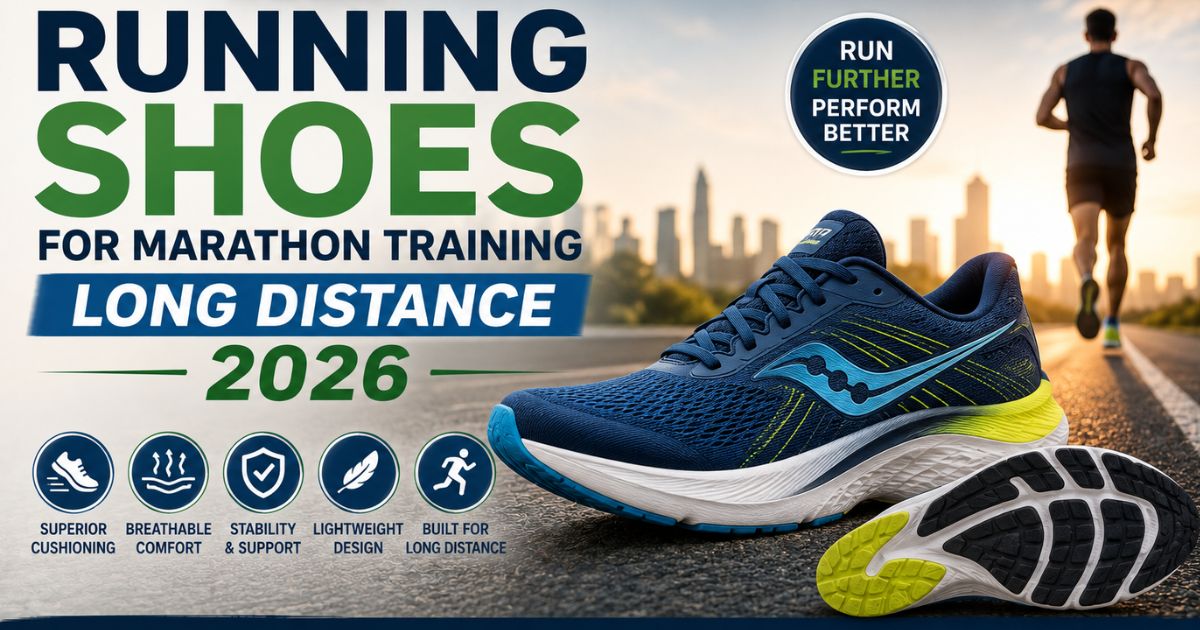

Choosing the right running shoes for marathon training can make the difference between crossing the finish line strong or struggling through weeks of unnecessary discomfort. Marathon training demands footwear that can handle hundreds of miles while protecting your joints, supporting your natural gait, and maintaining performance as fatigue sets in during those critical 18-20 mile runs.
This guide examines the most effective marathon training shoes currently available, based on biomechanical principles, durability testing, and real-world performance across different runner types. You’ll learn exactly which shoes match your training style, how to evaluate critical features that matter for high-mileage weeks, and which models deliver the best value for the 300-500 miles most marathon training plans require.
Understanding Marathon Training Shoe Requirements
Marathon training shoes differ fundamentally from racing flats or casual running shoes. Your training footwear needs to withstand 12-20 weeks of progressive mileage, typically ranging from 30-70 miles per week depending on your experience level.
Key characteristics of effective marathon trainers:
- Midsole durability lasting 300-500 miles minimum
- Adequate cushioning to absorb repetitive impact across varying paces
- Stability features appropriate to your biomechanics
- Breathable upper materials for temperature regulation
- Comfortable fit that accommodates foot swelling during long runs
- Weight balance between protection and efficiency
The best training shoe for your marathon preparation depends on your running mechanics, weekly mileage, training surfaces, injury history, and pace targets.
Top Running Shoes for Marathon Training in 2026
Nike Vaporfly Next Nature 3
The Vaporfly series continues to dominate among competitive marathoners, and the 2026 Next Nature 3 version maintains that performance edge while improving durability.
Best for: Runners targeting sub-4:00 marathons who want race-day technology in training
Key features:
- ZoomX foam with carbon fiber plate configuration
- Improved outsole rubber coverage (40% more than previous versions)
- 8mm heel-toe offset
- Weight: 7.2 oz (men’s size 9)
- Expected lifespan: 300-400 miles
Strengths:
- Exceptional energy return for maintaining pace on tired legs
- Significantly improved durability compared to earlier Vaporfly models
- Effective for tempo runs and marathon-pace workouts
Limitations:
- Premium price point ($285)
- Less suitable for recovery runs or very slow paces
- Requires adaptation period for runners new to carbon plating
ASICS Gel-Nimbus 27
ASICS refined their flagship cushioned trainer with enhanced FF Blast Plus Eco foam that provides better rebound without sacrificing the plush comfort the Nimbus line is known for.
Best for: Neutral runners seeking maximum cushioning for high-mileage training weeks
Key features:
- Dual-density midsole with FF Blast Plus Eco and softer top layer
- Gel technology in heel and forefoot
- 10mm drop
- Weight: 10.1 oz (men’s size 9)
- Expected lifespan: 450-550 miles
Strengths:
- Superior cushioning for recovery runs and easy mileage
- Excellent durability that outlasts most competitors
- Accommodates foot swelling well during long runs
- Wide fit options available
Limitations:
- Heavier than performance-oriented trainers
- May feel sluggish during faster workouts
- Higher stack height takes adjustment
Brooks Ghost 17
The Ghost remains one of the most reliable marathon training shoes, offering balanced cushioning and smooth transitions without specialized features that might complicate shoe selection.
Best for: Runners wanting a dependable, versatile trainer for all workout types
Key features:
- DNA Loft v3 midsole
- Segmented crash pad for smooth heel-toe transition
- 12mm drop
- Weight: 9.4 oz (men’s size 9)
- Expected lifespan: 400-500 miles
Strengths:
- Extremely versatile across different paces and distances
- Consistent performance throughout shoe lifespan
- Widely available in specialty running stores
- Fits true to size for most runners
Limitations:
- Doesn’t excel in any specific category
- Less energy return than carbon-plated options
- Traditional design lacks newer foam technologies
Hoka Mach 6
Hoka streamlined their Mach series to create a lighter, more responsive trainer that maintains protective cushioning through their signature geometry.
Best for: Runners who want Hoka cushioning without the weight penalty
Key features:
- ProFly+ midsole compound
- Early-stage Meta-Rocker geometry
- 5mm drop
- Weight: 7.9 oz (men’s size 9)
- Expected lifespan: 350-450 miles
Strengths:
- Impressive weight-to-cushioning ratio
- Responsive enough for tempo workouts
- Smooth, efficient ride quality
- Works well for midfoot and forefoot strikers
Limitations:
- Lower drop requires adaptation for traditional heel strikers
- Less durable than heavier training models
- Narrower fit than other Hoka models
New Balance Fresh Foam X 1080v14
New Balance continues refining their premium neutral trainer with improved Fresh Foam X that balances softness with responsiveness.
Best for: Runners seeking plush comfort with a roomier toebox
Key features:
- Fresh Foam X midsole (full-length)
- Hypoknit upper with strategic support zones
- 8mm drop
- Weight: 9.2 oz (men’s size 9)
- Expected lifespan: 400-500 miles
Strengths:
- Spacious toebox accommodates natural toe splay
- Smooth, cushioned ride for long distances
- Excellent for runners with wider feet
- Quality construction and materials
Limitations:
- Premium pricing ($165)
- Foam may feel too soft for faster workouts
- Heavier than comparable models
Saucony Endorphin Speed 4
Positioned between daily trainers and racing shoes, the Endorphin Speed 4 uses a nylon plate and PWRRUN PB foam to deliver versatile performance.
Best for: Experienced runners wanting one shoe for both training and racing
Key features:
- PWRRUN PB foam with nylon plate
- Speedroll geometry
- 8mm drop
- Weight: 7.6 oz (men’s size 9)
- Expected lifespan: 300-400 miles
Strengths:
- Versatile across all training paces
- More affordable than carbon-plated alternatives
- Excellent energy return without harshness
- Natural-feeling plate integration
Limitations:
- Moderate durability for high-mileage runners
- May be too much shoe for easy recovery runs
- Nylon plate less aggressive than carbon versions
Altra Paradigm 7
For runners committed to zero-drop footwear, the Paradigm 7 provides substantial cushioning while maintaining natural foot positioning.
Best for: Zero-drop runners or those transitioning from traditional shoes
Key features:
- Altra EGO Max foam
- FootShape toebox design
- 0mm drop
- Weight: 10.3 oz (men’s size 9)
- Expected lifespan: 400-500 miles
Strengths:
- Encourages natural running mechanics
- Exceptional toe room prevents blisters and blackened toenails
- Substantial cushioning despite zero drop
- GuideRail technology provides subtle support
Limitations:
- Requires significant adaptation period
- Heavier than conventional trainers
- Limited availability in some regions
- Not ideal for runners with Achilles issues
adidas Adizero Boston 12
The Boston series bridges the gap between training workhorse and performance racer, now with improved Lightstrike Pro foam.
Best for: Runners wanting a lighter trainer for quality workouts and faster long runs
Key features:
- Lightstrike Pro foam with Energyrods (five-rod system)
- Continental rubber outsole
- 6.5mm drop
- Weight: 8.1 oz (men’s size 9)
- Expected lifespan: 350-450 miles
Strengths:
- Exceptional grip from Continental rubber
- Responsive for tempo runs and intervals
- More durable than pure racing shoes
- Comfortable at marathon pace
Limitations:
- Less cushioning for very slow recovery runs
- Rod system may feel stiff initially
- Narrower fit than some competitors
How to Choose the Right Marathon Training Shoes
Assess Your Running Biomechanics
Your natural gait pattern should guide shoe selection more than marketing claims or what works for other runners.
Neutral runners exhibit minimal inward ankle roll (pronation) and have the widest selection of shoes. Most models in this guide work well for neutral mechanics.
Overpronators experience excessive inward ankle roll and benefit from stability features. Consider:
- Brooks Adrenaline GTS 24
- ASICS GT-2000 12
- Saucony Guide 17
Supinators (underpronators) show outward ankle roll and need cushioned neutral shoes with flexibility. The ASICS Gel-Nimbus 27 and New Balance 1080v14 work particularly well.
Determining your gait type:
- Video analysis at specialty running stores
- Wear patterns on current shoes (medial wear suggests overpronation)
- Wet foot test for arch height correlation
- Professional gait analysis from sports medicine specialists
Match Shoes to Training Phase
Marathon training involves different workout types requiring varying shoe characteristics.
Easy/Recovery runs (60-70% of training volume):
- Prioritize cushioning over responsiveness
- Choose heavier, more durable options
- ASICS Gel-Nimbus 27, Brooks Ghost 17, New Balance 1080v14
Marathon-pace runs and long runs:
- Balance cushioning with efficiency
- Select shoes you’ll race in or similar models
- Brooks Ghost 17, Hoka Mach 6, Saucony Endorphin Speed 4
Tempo runs and speed work:
- Emphasize responsiveness and lighter weight
- Consider plated options for experienced runners
- Nike Vaporfly Next Nature 3, adidas Adizero Boston 12, Saucony Endorphin Speed 4
Many successful marathoners rotate 2-3 different shoe models throughout their training cycle, matching footwear to workout intensity.
Consider Your Weekly Mileage
Higher mileage runners should prioritize durability and have multiple pairs in rotation.
| Weekly Mileage | Shoe Strategy | Rotation Recommendations |
|---|---|---|
| Under 30 miles | Single pair acceptable | One versatile trainer (Brooks Ghost 17) |
| 30-50 miles | Two-shoe rotation ideal | One cushioned + one responsive |
| 50-70 miles | Two-three shoe rotation | Daily trainer + uptempo shoe + recovery shoe |
| Over 70 miles | Three+ shoe rotation | Multiple pairs to extend lifespan and vary stress patterns |
Rotating shoes provides biomechanical variation that may reduce injury risk while extending the functional lifespan of each pair.
Factor in Training Surface
Your primary training terrain significantly impacts appropriate shoe selection.
Road running (asphalt/concrete):
- Requires more cushioning due to surface hardness
- Durable outsole rubber essential
- Any shoe in this guide works well
Mixed surface (roads + paths):
- Moderate tread pattern beneficial
- Durable upper materials
- Brooks Ghost 17, Hoka Mach 6
Trail running:
- Requires specialized trail shoes with aggressive tread
- Consider Saucony Peregrine 14 or HOKA Speedgoat 6
- Road shoes wear excessively fast on technical trails
Treadmill training:
- Less cushioning needed due to belt absorption
- Lighter shoes feel better on treadmills
- Any model works; consider less expensive options
Account for Body Weight and Impact Forces
Heavier runners generate greater impact forces requiring more substantial cushioning and support structures.
Runners over 180 lbs (82 kg):
- Prioritize maximum cushioning
- Look for reinforced midsole construction
- ASICS Gel-Nimbus 27, Brooks Ghost 17, New Balance 1080v14
- Avoid minimal cushioning and racing flats for high-mileage training
Lighter runners under 140 lbs (64 kg):
- Can use less cushioning effectively
- Benefit more from responsive foams
- Nike Vaporfly Next Nature 3, Hoka Mach 6, Saucony Endorphin Speed 4
Evaluate Fit and Comfort Priorities
Perfect fit matters more than technology. Uncomfortable shoes cause blisters, blackened toenails, and abandoned training plans.
Fit checklist for marathon trainers:
- Thumbnail width (12-15mm) between longest toe and shoe end
- Secure heel counter with minimal slippage
- No pressure points across midfoot or toebox
- Accommodates your orthotic if you use one
- Comfortable immediately—breaking in shouldn’t hurt
Width considerations:
Most brands offer width options, but standard widths vary:
- Narrow/standard fits: Nike, Saucony, adidas
- Medium/true fits: Brooks, Hoka
- Roomy/wide fits: Altra, New Balance, ASICS
Try shoes in the afternoon when feet are slightly swollen, similar to how they’ll feel during long training runs.
Marathon Training Shoe Comparison Chart
| Model | Weight (oz) | Drop (mm) | Cushioning | Responsiveness | Durability (miles) | Price |
|---|---|---|---|---|---|---|
| Nike Vaporfly Next Nature 3 | 7.2 | 8 | Moderate | Excellent | 300-400 | $285 |
| ASICS Gel-Nimbus 27 | 10.1 | 10 | Maximum | Moderate | 450-550 | $170 |
| Brooks Ghost 17 | 9.4 | 12 | High | Moderate | 400-500 | $150 |
| Hoka Mach 6 | 7.9 | 5 | High | High | 350-450 | $160 |
| New Balance 1080v14 | 9.2 | 8 | High | Moderate | 400-500 | $165 |
| Saucony Endorphin Speed 4 | 7.6 | 8 | Moderate | Excellent | 300-400 | $180 |
| Altra Paradigm 7 | 10.3 | 0 | High | Moderate | 400-500 | $175 |
| adidas Adizero Boston 12 | 8.1 | 6.5 | Moderate | High | 350-450 | $160 |
Breaking In Your Marathon Training Shoes
Despite marketing claims, quality running shoes should feel comfortable immediately, though optimal performance develops over the first 30-50 miles.
Proper break-in process:
- First run (3-5 miles): Easy pace on familiar route to assess comfort and identify pressure points
- Runs 2-5 (20-30 total miles): Gradually increase distance while maintaining easy effort
- After 30 miles: Foam reaches optimal compression characteristics; introduce harder workouts
- 50+ miles: Full break-in complete; suitable for any workout including long runs
Warning signs during break-in:
- Blisters forming in same location repeatedly
- Persistent hot spots or numbness
- Pain in feet, ankles, or knees that wasn’t present before
- Unusual muscle soreness patterns
These indicate fit problems, not normal break-in. Return or exchange shoes showing these issues within the first 50 miles.
When to Replace Your Marathon Training Shoes
Midsole foam degradation reduces shock absorption and can increase injury risk, making timely replacement crucial during marathon training.
Replace shoes when you notice:
- Mileage threshold reached: 300-500 miles depending on model and your weight
- Visible midsole compression: Foam appears compressed or wrinkled when compared to new pair
- Reduced cushioning feel: Shoes feel noticeably firmer or harsher than when new
- Upper deterioration: Holes, separation, or structure breakdown
- Unexplained aches: New pains coinciding with higher shoe mileage
Tracking shoe mileage:
- Running apps (Strava, Garmin Connect) track shoe-specific mileage
- Physical log in training journal
- Purchase date plus weekly mileage estimation
Consider purchasing your next pair around 250 miles to allow proper break-in before current shoes fully degrade.
Stability and Motion Control Alternatives
Approximately 40-50% of runners overpronate to some degree. While modern thinking emphasizes neutral shoes for most runners, genuine stability needs require appropriate footwear.
Brooks Adrenaline GTS 24
The best-selling stability shoe offers GuideRails technology that activates only when excessive motion occurs.
Key features:
- DNA Loft v2 cushioning
- GuideRails holistic support system
- 12mm drop
- Weight: 10.2 oz
Best for: Moderate overpronators who want cushioned support without rigid correction
ASICS GT-2000 12
A lighter stability option using dual-density foam rather than medial posts for gentler guidance.
Key features:
- FF Blast cushioning with Litetruss stability
- Rearfoot and forefoot gel units
- 8mm drop
- Weight: 9.5 oz
Best for: Runners wanting responsive stability without traditional support intrusion
Saucony Guide 17
Combines stability features with performance-oriented foam for runners who don’t want to sacrifice speed.
Key features:
- PWRRUN cushioning with medial TPU guidance frame
- 6mm drop
- Weight: 9.0 oz
Best for: Faster runners needing mild stability support
Modern stability shoes have evolved significantly from rigid motion control designs. Current models provide subtle guidance while maintaining natural foot movement.
Carbon-Plated Shoes for Training: Worth It?
Carbon-plated “super shoes” demonstrate measurable performance benefits (2-4% efficiency improvement), but their role in marathon training remains debated.
Arguments for training in carbon-plated shoes:
- Adaptation to race-day footwear reduces variables
- Energy savings beneficial during long runs and tempo workouts
- Reduced muscle damage may speed recovery
- Psychological confidence from using proven technology
Arguments against regular training use:
- Significant cost ($250-$350) for limited durability (250-350 miles)
- May weaken foot and lower leg musculature through reduced natural stabilization
- Performance benefits minimal at easy training paces
- Injury risk if introduced too quickly
Balanced approach:
- Use carbon-plated shoes for marathon-pace runs and key long runs (final 6-8 weeks)
- Perform most training in traditional trainers to maintain strength
- Complete at least 50-75 miles in race shoes before marathon day
- Consider nylon-plated alternatives (Saucony Endorphin Speed 4) for better value
Budget-Conscious Marathon Training Options
Marathon training shouldn’t require financial hardship. Several strategies make quality footwear affordable.
Cost-saving approaches:
Previous model versions: Last year’s Ghost 16 performs nearly identically to Ghost 17 but costs $90-110 when new versions release.
Outlet and discount retailers: Running Warehouse, Road Runner Sports, and brand outlets offer 20-40% discounts on discontinued colorways.
Mileage maximization: Shoes lasting 500 miles cost half as much per mile as those lasting 250 miles. Brooks Ghost 17, ASICS Gel-Nimbus 27, and New Balance 1080v14 offer superior durability.
Strategic purchasing: Buy new shoes during Black Friday, end-of-season sales, or when replacing models are announced.
Best value marathon trainers:
- Brooks Ghost 17: $150, 400-500 mile lifespan = $0.30-0.38 per mile
- ASICS Gel-Nimbus 27: $170, 450-550 mile lifespan = $0.31-0.38 per mile
- Saucony Ride 17: $140, 400-450 mile lifespan = $0.31-0.35 per mile
Quality marathon shoes represent investment in injury prevention. Budgeting $300-400 for footwear across a 16-week training cycle (typically 2-3 pairs) remains reasonable compared to race fees, travel, and potential medical costs from inappropriate shoes.
Special Considerations for Different Runner Types
First-Time Marathoners
Your first marathon training cycle involves adapting to significantly higher mileage than you’ve previously run.
Shoe priorities:
- Maximum cushioning to protect against unfamiliar stress
- Proven reliability over experimental designs
- Comfortable fit that prevents blisters during long runs
Recommended models:
- Brooks Ghost 17 (versatile and dependable)
- ASICS Gel-Nimbus 27 (maximum cushioning)
- New Balance 1080v14 (comfort-focused with room for swelling)
Avoid carbon-plated racing shoes until you’ve established base fitness and proper running mechanics.
Experienced Marathoners (Multiple Finishes)
With established training patterns and known preferences, you can optimize for performance.
Shoe priorities:
- Performance characteristics matching goal pace
- Appropriate shoes for different workout types
- Proven models from successful previous training
Recommended approach:
- Responsive daily trainer (Hoka Mach 6, Saucony Endorphin Speed 4)
- Race-day shoe for quality sessions (Nike Vaporfly Next Nature 3)
- Recovery shoe for easy mileage (ASICS Gel-Nimbus 27)
Masters Runners (Over 40)
Age-related factors including reduced shock absorption in joints and longer recovery periods influence shoe selection.
Shoe priorities:
- Enhanced cushioning to compensate for tissue changes
- Stability features if biomechanics have shifted
- Durable construction supporting multiple training cycles
Recommended models:
- ASICS Gel-Nimbus 27 (superior cushioning)
- Brooks Ghost 17 (reliable comfort)
- New Balance 1080v14 (accommodating fit)
Runners with Injury History
Previous injuries should inform shoe selection to minimize recurrence risk.
Plantar fasciitis history:
- Adequate arch support and heel cushioning
- Avoid minimal/zero-drop shoes initially
- Brooks Ghost 17, ASICS Gel-Nimbus 27
Achilles tendinopathy:
- Moderate heel-toe offset (8-10mm)
- Avoid sudden drop changes
- Cushioned heel (ASICS Gel-Nimbus 27)
Knee pain (patellofemoral issues):
- Maximum cushioning to reduce impact forces
- Consider stability shoes even if neutral runner
- ASICS Gel-Nimbus 27, New Balance 1080v14
Stress fracture history:
- Highest available cushioning
- Avoid racing flats and minimal shoes
- Consider calcium and vitamin D evaluation
- ASICS Gel-Nimbus 27, Hoka Bondi 9
Common Mistakes in Marathon Training Shoe Selection
Choosing Shoes Based on Appearance
Colorways and styling don’t affect performance. Focus on function over aesthetics, though many brands now offer attractive designs that also perform well.
Assuming Expensive Equals Better
The $285 Nike Vaporfly Next Nature 3 offers measurable advantages for competitive runners, but provides minimal benefit over $150 trainers for runners completing marathons over 4:30. Match technology to your actual needs.
Ignoring Fit for Features
Advanced foam technology and carbon plates can’t overcome poor fit. A perfectly fitting basic trainer outperforms an ill-fitting super shoe every time.
Using Only One Pair for Entire Training Cycle
Single-shoe training creates repetitive stress patterns and forces running in degraded footwear late in preparation. Rotate at least two pairs, even if one is an older model reserved for easy runs.
Switching Shoes Too Close to Race Day
Introduce race-day shoes no later than 8 weeks before your marathon, accumulating 50-75 miles minimum. Last-minute shoe changes create unnecessary risk.
Neglecting to Replace Worn Shoes
Continuing to run in shoes beyond their functional lifespan significantly increases injury risk precisely when training intensity peaks. Replace proactively around 300-400 miles.
Buying Shoes Without Trying Them
Shoe fit varies dramatically between brands and models. Purchase from retailers with generous return policies and actually run in shoes before committing, even if buying online.
Expert Tips for Maximizing Marathon Training Footwear
Rotate shoes strategically: Alternating between shoes with different stack heights, drops, and cushioning characteristics distributes stress across various tissues, potentially reducing overuse injury risk.
Track mileage religiously: Use apps or manual logs to monitor each shoe’s accumulated distance. Replace proactively rather than reactively.
Match shoes to surfaces: Use more cushioned shoes for concrete/asphalt, moderate cushioning for asphalt/paths, and trail-specific shoes for technical terrain.
Save race shoes for quality sessions: If using carbon-plated race shoes, limit training use to marathon-pace runs, tempo workouts, and final long runs to preserve both the shoes and your adaptation to them.
Test nutrition with race shoes: Practice fueling strategies during runs wearing race-day shoes to identify any unexpected issues with fit changes during long efforts.
Buy early in training cycle: Purchase shoes during the first 2-4 weeks of marathon training when mileage remains moderate, allowing proper break-in before critical long runs begin.
Consider sock thickness: The socks you’ll race in should be the socks you train in. Ensure shoes fit properly with your actual running socks, not casual athletic socks.
Address hot spots immediately: Any consistent rubbing or pressure points won’t improve with more miles. Make adjustments (lacing techniques, different socks, heel pads) or change shoes.
Dry shoes properly: Rotate between pairs to allow 48 hours drying time. Remove insoles and use newspaper or boot dryers—never direct heat sources that degrade foam.
Keep backup shoes ready: Have a proven, broken-in backup pair available if your primary shoes develop problems mid-training cycle.
Future Trends in Marathon Training Footwear
The running shoe industry continues rapid innovation, with several developments likely to influence marathon training in coming years.
Advanced foam compounds: Manufacturers are developing more durable versions of super-foam materials, potentially offering Vaporfly-level performance with Ghost-level longevity by 2027-2028.
Sustainable materials: Increased use of bio-based foams, recycled materials, and carbon-neutral manufacturing processes without sacrificing performance.
Customization technology: 3D scanning and printing may enable affordable semi-custom shoes matching individual foot shapes and biomechanics.
Smart shoe integration: Embedded sensors providing real-time biomechanical feedback, though adoption remains limited by cost and practicality concerns.
Plate democratization: Carbon and composite plate technology continuing to move downstream into mid-price trainers ($130-160 range).
Regulatory considerations: World Athletics continues evaluating shoe technology regulations, potentially affecting permissible stack heights and plate configurations.
Despite technological advancement, fundamental shoe selection principles remain constant: proper fit, appropriate cushioning, and matching footwear to your individual biomechanics and training demands.
Frequently Asked Questions
How many pairs of shoes do I need for marathon training?
Most runners benefit from two pairs: a cushioned daily trainer for easy runs and long runs, and a responsive shoe for tempo workouts and quality sessions. High-mileage runners (50+ miles weekly) often use three pairs to rotate daily and extend shoe lifespan.
Can I train and race in the same shoes?
Yes, many runners successfully use one versatile model for both training and racing. The Brooks Ghost 17, Saucony Endorphin Speed 4, and Hoka Mach 6 work well for this approach. Competitive runners often train in durable shoes and race in lighter, carbon-plated models.
How long do marathon training shoes last?
Most quality trainers last 300-500 miles depending on the model, your weight, running mechanics, and training surfaces. Heavier runners and those training primarily on concrete should expect the lower end of this range. Track mileage and replace when cushioning noticeably degrades.
Should I buy stability shoes if I overpronate?
Mild overpronation is normal and doesn’t necessarily require stability shoes. Consider stability models if you’ve had recurring injuries associated with excessive pronation, or if video gait analysis shows significant inward ankle collapse. Many runners previously told they needed stability shoes actually run well in neutral models.
Are carbon-plated shoes necessary for marathon training?
No. Carbon-plated shoes offer measurable benefits but aren’t necessary for successful marathon training. They’re most beneficial for competitive runners targeting faster times. Most marathoners train effectively in traditional cushioned trainers and can optionally use plated shoes for race day after minimal adaptation.
When should I start wearing my race-day shoes?
Begin wearing race shoes 6-8 weeks before your marathon, accumulating 50-75 miles through marathon-pace workouts and selected long runs. This provides adequate adaptation while preserving shoe life for race day when they’ll perform optimally.
What’s the difference between men’s and women’s running shoes?
Women’s shoes typically feature narrower heels, wider forefeet relative to heel width, and different cushioning ratios accounting for biomechanical differences. However, fit matters more than gender designation—some women run better in men’s shoes and vice versa. Try both if standard gendered sizing doesn’t fit well.
Can I use trail running shoes for road marathon training?
Trail shoes work for road training but wear faster due to softer rubber compounds and aggressive tread patterns. The added weight and traction features provide no benefit on pavement. Use road-specific shoes unless training includes significant trail sections.
How much should I spend on marathon training shoes?
Quality marathon trainers range from $130-180, representing good value through their lifespan. Premium models ($200-285) offer advanced technology beneficial for competitive runners but provide diminishing returns for recreational marathoners. Prioritize fit and durability over price.
Should I size up for marathon training shoes?
Most runners should have 12-15mm (thumbnail width) between their longest toe and shoe end, which often means a half-size larger than casual shoes. Feet swell during long runs, and this space prevents blisters and blackened toenails common in too-tight shoes.
Do I need different shoes for different training runs?
Not necessarily, though many experienced runners prefer matching shoes to workout type: cushioned shoes for easy runs, responsive models for tempo workouts, and race shoes for marathon-pace sessions. A single versatile trainer like the Brooks Ghost 17 can handle all workout types adequately.
Are expensive running shoes worth it for slower marathoners?
Performance benefits from premium shoes matter less at slower paces where cushioning, comfort, and durability provide more value than marginal efficiency gains. Runners completing marathons over 4:30 often get better value from $140-170 shoes like the Brooks Ghost 17 or ASICS Gel-Nimbus 27 than $250+ super shoes.
Conclusion
Selecting the right running shoes for marathon training requires balancing cushioning, responsiveness, durability, and fit with your individual biomechanics, training approach, and performance goals. The Brooks Ghost 17 and ASICS Gel-Nimbus 27 remain outstanding choices for most runners, offering proven reliability and comfort through high-mileage training blocks. Competitive marathoners benefit from the performance advantages of the Nike Vaporfly Next Nature 3 or Saucony Endorphin Speed 4, while runners seeking lighter options appreciate the Hoka Mach 6’s efficient design.
Successful marathon training depends more on consistent mileage, proper recovery, and intelligent programming than equipment, but appropriate footwear supports those priorities by preventing injuries and maintaining comfort across hundreds of training miles. Invest time finding shoes that fit your feet perfectly, match them appropriately to different workout types, track their mileage carefully, and replace them proactively. These practices maximize your training quality and set you up for a strong marathon performance.
The best marathon training shoe isn’t the one with the most advanced technology or the highest price tag—it’s the one that feels comfortable on your feet mile after mile, protecting your body while allowing you to execute your training plan consistently. Start with the recommendations in this guide, test options at specialty running retailers, and trust your own experience over marketing claims or what works for other runners.